These 3 skills changed my life

Frontend Development, Code Review & Quality
Learn to build with AI - curated best practices, tutorials, and resources for building real products with AI coding tools.
Frontend Development, Code Review & Quality

Anthropic is handing the Agent Skills standard (SKILL.md) to the Linux Foundation's Agentic AI Foundation, so the spec now has vendor-neutral governance like MCP.
Anthropic's announcement of the Agent Skills donation to the Agentic AI Foundation (AAIF): what moves over, who maintains the spec now, adoption numbers since the December 2025 launch, and the roadmap for versioned releases and security guidance.
AI & Agent Building, Skill Development
Frontend Development, Code Review & Quality
Frontend Development, Code Review & Quality
Frontend Development, Code Review & Quality, AI & Agent Building
Productivity & Planning

Cursor cloud agents can now build shareable interactive canvases, and the new Environments API (beta) lets you script the sandboxes they run in.
Cursor's October 16 changelog entry on cloud agents: interactive canvases that agents build and teams share by link, a beta Environments API, and bigger, faster multi-repo environments.
Documentation, AI & Agent Building
Productivity & Planning, Sales & Marketing
Frontend Development, Code Review & Quality
With agents writing ~90% of Claude Code, the team cut human review via risk tiers and layered AI review - merged PRs doubled while reverts fell 40%+.
Addy Osmani, Morgan Westlee Lunt and Qing Wang of the Claude Code team at Anthropic describe how they review code when agents write most of it: layered automated checks, a risk classifier for human approval, repo-specific REVIEW.md guidance, and measured reviewer quality. Figures are self-reported.
AI & Agent Building, Skill Development
Frontend Development, Code Review & Quality, Testing & QA
Productivity & Planning
Frontend Development, Code Review & Quality

Anthropic's merges jumped from 2,500 to 30,000+ a day as Claude took over coding, so a team of seven replaced git with Scion, a version control system built for always-online agents.
Anthropic's source control team explains why git broke at agent scale in its monorepo and how they built Scion, the Antique code review tool, code search and access control in five months, with Claude doing much of the work.
AI & Agent Building, Skill Development

Gemini 4 Argon is open to developers on the paid Gemini API in AI Studio and Android Studio, and to AI Ultra subscribers in Antigravity - aimed at long-horizon coding and migrations.
Google's official developer announcement for Gemini 4 Argon, its frontier model for real-world software engineering, enterprise knowledge work and cyber defense. It covers where developers can access the model and points to the Gemini API, Antigravity and Android Studio guides.
Documentation, AI & Agent Building
![REA: Reverse Engineer Anything With Agents [2026] - article cover](https://img.kunalganglani.com/images/vzekdneq/production/3fd63e2fb141dfd333f009572e16af183d30e9e4-1200x675.webp)
REA gives Claude Code, Codex and Cursor an MCP server that decompiles binaries, Electron apps, .NET and APKs locally - but verifying its evidence is now the real bottleneck.
Kunal Ganglani, a Toronto engineering leader, walks through REA (morluto/rea), the open-source reverse-engineering MCP server and CLI that went viral on GitHub, covering setup, case studies, limits, prompt-injection risk and legal questions.
Documentation, AI & Agent Building
Frontend Development, Code Review & Quality, AI & Agent Building
Productivity & Planning
Frontend Development, Code Review & Quality

Agents work far better on game code once you add seeded determinism, screenshot diffs, a command pattern and text-based profiling - the harness, not the model, does the heavy lifting.
Game developer Kyle Kukshtel turns a talk into a practical guide for making game codebases workable for LLM agents like Claude Code, with named tools and patterns from real projects. He notes the techniques matter most on larger codebases.
AI & Agent Building, Skill Development
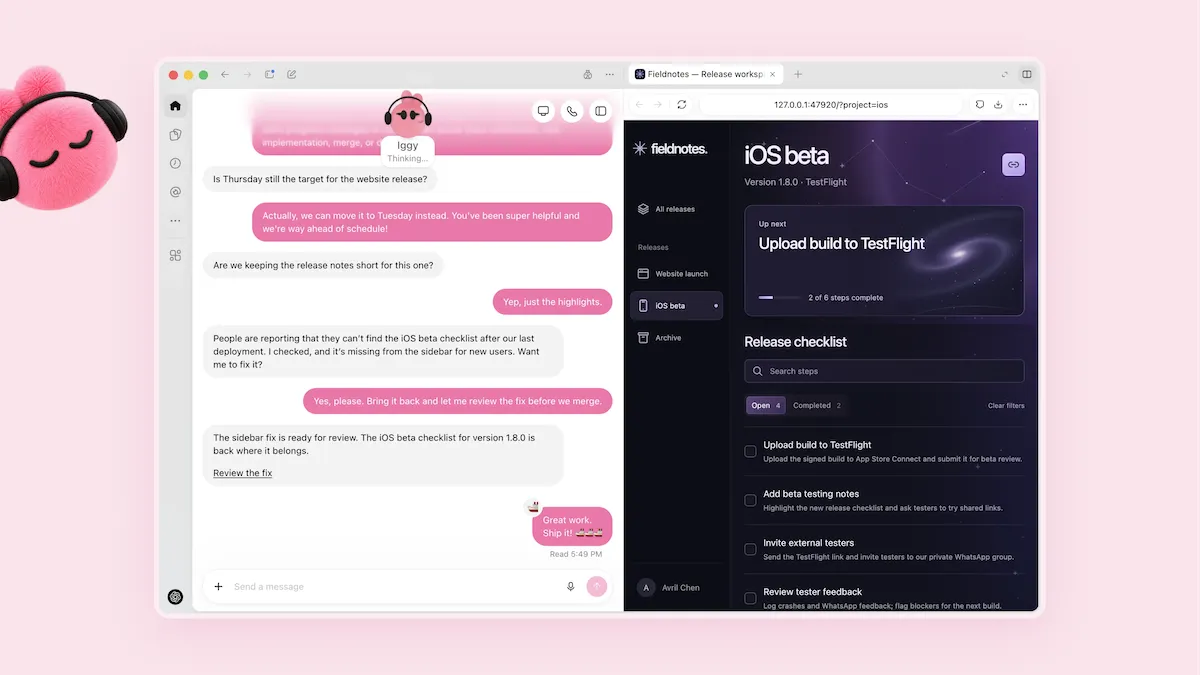
GPT-6.1 Sol nearly matches GPT-6 Astra on agentic coding at one-fifth the per-token price, and beats it by 1 point in Codex at under 15% of the cost per task.
The Batch from DeepLearning.AI covers OpenAI's DevDay releases: GPT-6.1 Sol, the Dots personal agents, the Ultrafast speed tier and the $500 Pro plan. It gives prices, context limits and independent Artificial Analysis scores, and reports the cancelled GPT-6.1 Astra release.
AI & Agent Building, Automation & Workflows

Claude Code and Codex agents decompiled a full FPS to C++ - 99% of functions present, 83% byte-exact - but only after byte-matching verification stopped them faking progress.
Maurice Heumann documents a months-long run of Claude Code and Codex CLI agents (Sonnet 5, Opus 5.5, GPT-6 Luna and others) decompiling an unnamed first-person shooter, coordinated via GitHub Issues, Discord and ida-mcp, including what went wrong and roughly 600-700 billion tokens of cost.
Documentation, AI & Agent Building

Haiku 5.5 at low effort passed 8 of 8 hands-on Python tasks for about a tenth of Haiku 4.5's cost - but max effort did worse and prices jump 5x above 100K tokens.
Josphat Mutai of ComputingForGeeks tests Claude Haiku 5.5 against the live API the day after its October 7, 2026 launch. Covers pricing tiers, the new tokenizer, a graded coding test at each effort level, streaming speed, API breaking changes and how Claude Code uses the model.
AI & Agent Building, Skill Development, Testing & QA
AI & Agent Building, Skill Development
Productivity & Planning
A scheduled agent that briefs you daily needs bookmarks instead of time windows, confirmed posting, and a spending cap - here is the reference build on Claude Managed Agents.
Lance Martin and CJ Avilla on the claude.dev blog walk through a reference daily-brief agent on Claude Managed Agents (beta) that reads Slack and GitHub on a cron, tracks state in memory stores, and posts only what the reader would act on.
Documentation, AI & Agent Building
Frontend Development, Code Review & Quality

Claude Haiku 5.5 matches GPT-6 Luna at $0.10/$0.50 per million tokens up to 100K tokens, but a new tokenizer uses about 1.25x more tokens.
Simon Willison tests Anthropic's Claude Haiku 5.5 with his pelican benchmark across all five reasoning levels, compares its pricing with GPT-6 Luna, and covers the new monthly API credits for Max and Team subscribers.
Documentation, AI & Agent Building
Claude Code cloud sessions run each task in a fresh VM on its own branch, keep going while your laptop sleeps, and never see your GitHub token.
Addy Osmani's 18-minute field guide on the claude.dev blog covers how Claude Code cloud sessions work, a three-task parallel experiment, the security model, seven workflows, environment setup and the limits to plan around.
Documentation, AI & Agent Building
Claude Code mods are plugins whose JS or TS handlers run inside the agent - they can redraw the UI and approve tool calls, and they are not sandboxed.
Developers Digest explains Claude Code mods as of October 2026: what they can do, when to pick a mod over a hook, a skill or an MCP server, a three-file tutorial, and the security limits. It draws on Anthropic's docs and the sample mods in the claude-code-playground repo.
AI & Agent Building, Skill Development
Frontend Development, Code Review & Quality
Productivity & Planning
Productivity & Planning
Coding agents make it easy to spin up paid services, so every usage-billed API and cloud needs hard budget caps that cut off spend by default.
Simon Willison argues that pay-by-usage services must ship hard spending limits as the default, with uncapped billing as an explicit opt-in, and notes that AWS and Google Cloud have started to add them.
AI & Agent Building, Skill Development
GPT-6.1 Sol nearly matches Astra on agentic coding at about a fifth of the price - test it on cost per solved task, not price per token, before switching.
Developers Digest sorts OpenAI's DevDay 2026 launches by what developers can use now - GPT-6.1 Sol, Ultrafast, the Decisions API, cloud Codex and the Pro 500 plan - and adds its own cost model and a concrete test plan.
Documentation, AI & Agent Building
AI & Agent Building, Skill Development
AI & Agent Building, Automation & Workflows
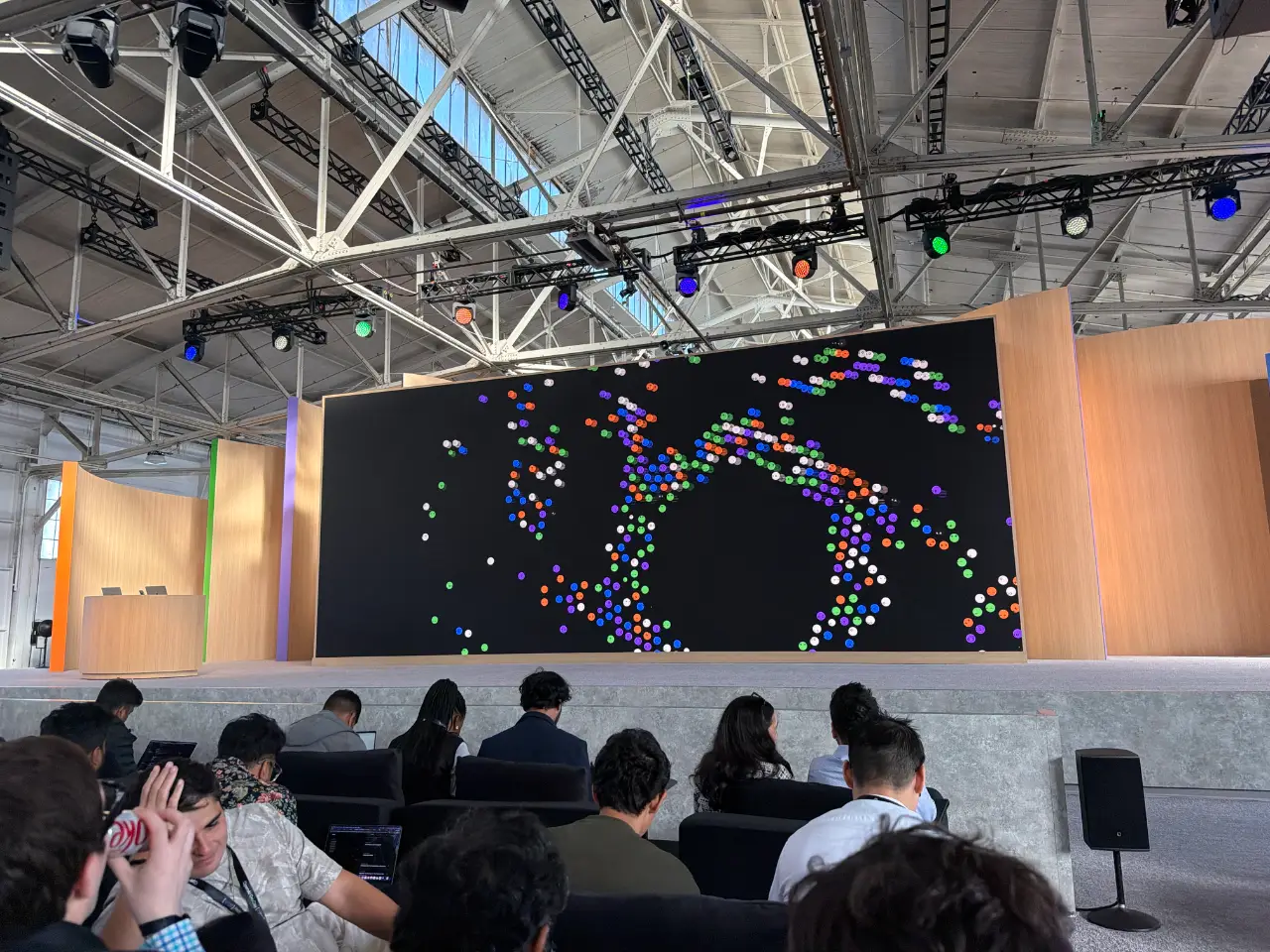
OpenAI DevDay 2026 launched Dots personal agents, ChatGPT Space, GPT-6.1 Sol at a fifth of Astra's price, and an 8x Ultrafast mode in the API and Codex.
Simon Willison's minute-by-minute live blog of the OpenAI DevDay 2026 keynote in San Francisco, covering the new agent, model, pricing and Codex announcements as they happened.
Documentation, AI & Agent Building

Claude Sonnet 5.5 matches Sonnet 5 pricing, runs 30%+ faster, and now powers the free claude.ai tier - but max thinking effort can burn 128,000 tokens and fail.
Simon Willison's same-day notes on Anthropic's Claude Sonnet 5.5 (September 28, 2026): launch claims, his pelican-on-a-bicycle SVG tests at different thinking efforts, a max-effort bug shared with Opus 5.5, and what the free-tier switch means next to ChatGPT.
AI & Agent Building, Skill Development
AI & Agent Building, Skill Development
Frontend Development, Code Review & Quality
On Opus 5.5 the real cost is per finished task, not per token - fewer turns, warm caches and cheap checkpoints cut spend more than dialing effort down.
Addy Osmani on the claude.dev blog (September 25, 2026) breaks down Opus 5.5 pricing against its predecessor and explains which workflow choices in Claude Code actually move the cost of finishing a task.
AI & Agent Building, Skill Development
Frontend Development, Code Review & Quality
Frontend Development, Code Review & Quality
AI & Agent Building, Skill Development
Anthropic made claude.ai and the Claude desktop app about 3x faster in a two-week sprint where Claude did most of the investigation and shipped the PRs.
Anthropic engineers Raymond Wang, Sam Attard and Issac G. describe an August 2026 performance sprint run from one Slack channel. Claude built the benchmarks, shipped PRs and watched deploys, while humans set goals and approved each change. Covers measurement, CI ratchets and rollouts.
AI & Agent Building, Skill Development, Testing & QA
Claude Opus 5.5 costs $4/$20 per million tokens, scores 66.4% on Terminal-Bench 4.0, and runs over 30% faster than Opus 5.
Anthropic's launch post for Claude Opus 5.5, its strongest Opus model for agentic coding. It covers pricing, cache-read costs, Terminal-Bench 4.0 results, speed, and cloud availability.
AI & Agent Building, Skill Development
AI & Agent Building, Skill Development
AI & Agent Building, Automation & Workflows
Grok 4.7 is SpaceXAI's new coding model at $2/$6 per million tokens, available in Cursor and Grok Build, scoring 71.0% on DeepSWE v1.1.
SpaceXAI's official launch post for Grok 4.7 (September 21, 2026): a larger base model trained with longer reinforcement learning on hard, multi-hour tasks, with pricing, availability and benchmark results for coding and knowledge work.
Documentation, AI & Agent Building
AI & Agent Building, Automation & Workflows
Frontend Development, Code Review & Quality
Productivity & Planning, Sales & Marketing, Frontend Development
Productivity & Planning
![AI dev tool power rankings & comparison [Sept. 2026] - LogRocket Blog - article cover](https://blog.logrocket.com/wp-content/uploads/2025/07/ai_dev_tool_power_rankings_july_2025_web.png)
LogRocket scores 17 models and 12 tools across 50+ features for frontend work: Claude still tops the model chart on WebDev Arena, while OpenCode just knocked Cursor off the #1 tool spot.
Chizaram Ken's comparison guide for LogRocket (June 2026) ranks AI models and developer tools with feature tables and an interactive comparison tool. It is a frontend-focused power ranking, so scores lean on WebDev Arena Elo and tool ergonomics rather than pure SWE benchmarks.
Documentation, AI & Agent Building
Frontend Development, Code Review & Quality
Productivity & Planning
Productivity & Planning, Sales & Marketing

Cursor Projects hands big jobs to a coordinator agent that plans, delegates to thousands of cloud subagents, and keeps context for months - heavy Projects users merge 6x the PRs.
Alexi Robbins and Fredrika Lindh introduce Cursor Projects, a beta for features, migrations, and full apps run by a coordinator agent on its own cloud computer, with shared context files, Slack and PR triggers, and examples from Cursor's own engineering.
Documentation, AI & Agent Building
GPT-6 Astra ties Claude Fable 5.1 on intelligence and coding-agent scores at roughly 40% of the cost per task, and takes the lead on Terminal-Bench v4.0.
Artificial Analysis benchmarks OpenAI's GPT-6 Astra across its Intelligence Index, Coding Agent Index, Terminal-Bench, hallucination, and long-horizon evals, comparing cost, token use, and scores with Claude Fable 5.1, Opus 5, GPT-5.6 Sol, and Grok 4.6.
Documentation, AI & Agent Building
Frontend Development, Code Review & Quality, AI & Agent Building
AI & Agent Building, Automation & Workflows
Codex with GPT-6 Astra jumps 14.5 points over GPT-5.6 Sol on functional and secure code, yet Claude Code with Fable 5.1 still scores higher in half the time.
Luca Compagna of Endor Labs runs Codex with GPT-6 Astra through Endor's security-focused coding benchmark on real projects, comparing it with Codex on GPT-5.6 Sol and Claude Code on Opus 5 and Fable 5.1, with an anti-cheating review of flagged runs.
AI & Agent Building, Automation & Workflows
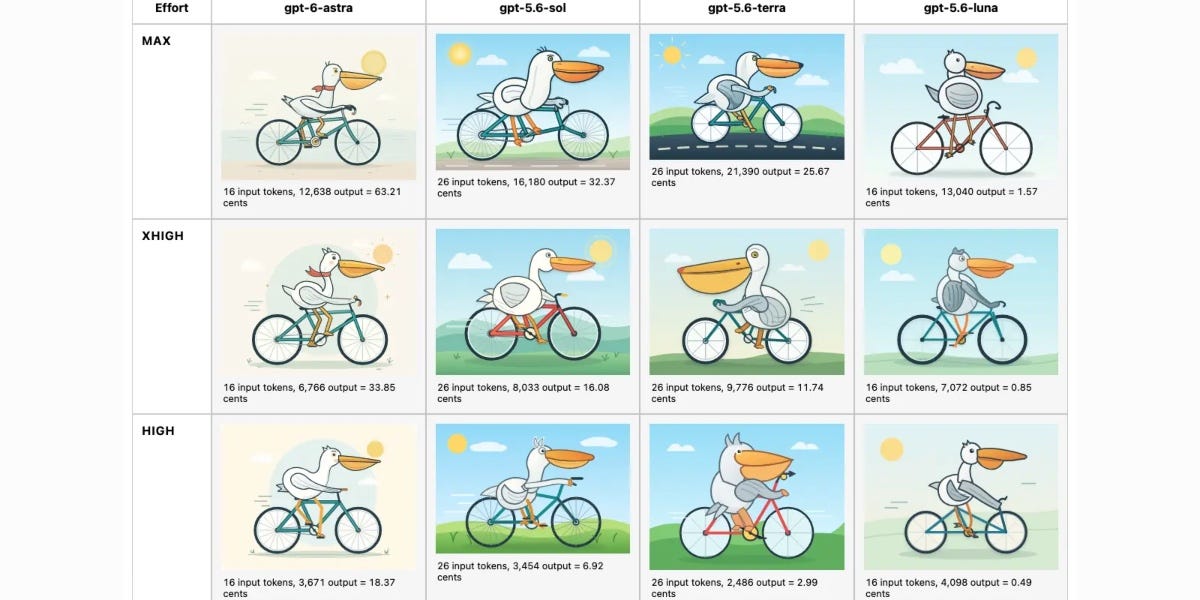
GPT-6 Astra wins on raw scores, but Simon Willison's own runs show Fable 5.1 holding the coding lead while Astra gets there cheaper at low reasoning.
Simon Willison's September 7 newsletter pairs hands-on testing of GPT-6 Astra, GPT-5.6 and Claude Fable 5.1 with analysis of the week's rogue-agent incident and a diff of Fable 5.1's system prompt. It is first-hand experimentation, not a link dump, and covers pricing per reasoning level, benchmark caveats, and the new copyright restrictions Anthropic added.
Documentation, AI & Agent Building
AI & Agent Building, Automation & Workflows
Frontend Development, Code Review & Quality
Productivity & Planning
AI & Agent Building, Automation & Workflows
Running GPT-6 Astra in Codex CLI means new config, a 272K-token surcharge line to watch, and the first OpenAI model rated Critical for cyber capability.
Daniel Vaughan's Codex Knowledge Base guide covers setting up GPT-6 Astra in Codex CLI: model id and effort settings, the 1.05M context window and its pricing tiers, the experimental notes-based context management, and what the Critical cyber rating changes.
AI & Agent Building, Automation & Workflows
Productivity & Planning
GPT-6 Astra catches 61.3% of labeled bugs against Sol's 59.0% and Opus 5's 50.2%, and costs 2.5x Sol per review task.
CodeRabbit engineers Erik Thorelli and Erfan Al-Hossami ran their own actionable-bug-coverage benchmark across GPT-6 Astra, GPT-5.6 Sol, Terra and Luna, Opus 5, and Claude Fable 5.1, scoring both ordinary reviews and harder cross-file comparisons, then published cost per task next to the accuracy so the trade-off stays visible.
Documentation, AI & Agent Building
Start Claude Fable 5.1 on Low effort. It is good enough to show whether the work is right, and cheap enough that you keep iterating.
Nate walks through a real financial-analysis task where Claude Fable 5.1 on the Low effort setting produced a seven-sheet Excel workbook with working formulas and a 13-slide deck from a single prompt, then argues that knowledge work needs cheap iterations because, unlike code, it carries no built-in feedback loop to catch its own errors.
Documentation, AI & Agent Building
GPT-6 Astra gives Codex persistent notes across context windows instead of compressing old work into summaries, so earlier requirements stay searchable.
Zac Hall's 2026-09-04 rundown for 9to5Mac of what GPT-6 Astra changes for ChatGPT and Codex users, covering the benchmark claims, the new context-preservation behavior, and how the rollout and pricing work across the paid tiers.
Documentation, AI & Agent Building
Productivity & Planning
Frontend Development, Code Review & Quality
Frontend Development, Code Review & Quality
GPT-6 Astra ships at $10 per million input and $50 per million output, and leads on computer use with 72.6% on OSWorld 2.0.
OpenAI's launch post for GPT-6 Astra, its most capable model so far, covering gains in computer and browser use, coding, scientific reasoning, cybersecurity, and long-context retrieval. Rollout starts with a limited set of organizations before reaching ChatGPT Plus, Pro, Business, and Enterprise, plus the API.
GPT-6 Astra prices at $10/$50 per million tokens, the same as Claude Fable 5.1, and trails it on the Intelligence Index at 61 against 66.
Simon Willison's release-day note on GPT-6 Astra, posted 2026-09-03. He pulls the numbers out of OpenAI's own announcement and Artificial Analysis, flags where the headline benchmark depends on a custom harness, and is upfront that he had not run the model himself yet.

Claire Vo took GPT-6 Astra through the projects that beat every earlier model, and the one-shot builds she had failed at repeatedly finally landed.
A build report from Claire Vo, published on Lenny's Newsletter on 2026-09-03. Instead of benchmarks it walks through what she actually shipped with GPT-6 Astra: computer-use work against her CRM, browser-automation QA, one-shot apps, a hardware hack and 3D asset generation.
Documentation, AI & Agent Building
Productivity & Planning
Productivity & Planning, Sales & Marketing
Productivity & Planning

A malicious .git/config can make Claude Code, Codex CLI, Cursor and four other agents run attacker code at startup, and four of the seven were still unpatched.
Manifold Security disclosed eight flaws across seven AI coding agents, reported by Swati Khandelwal for The Hacker News on 2026-09-02. The abuse path is Git's core.fsmonitor setting, a command Git runs to spot changed files, which the agents execute during startup without asking. The piece names the fixed and unpatched versions and the mitigation a developer can apply today.
Documentation, AI & Agent Building
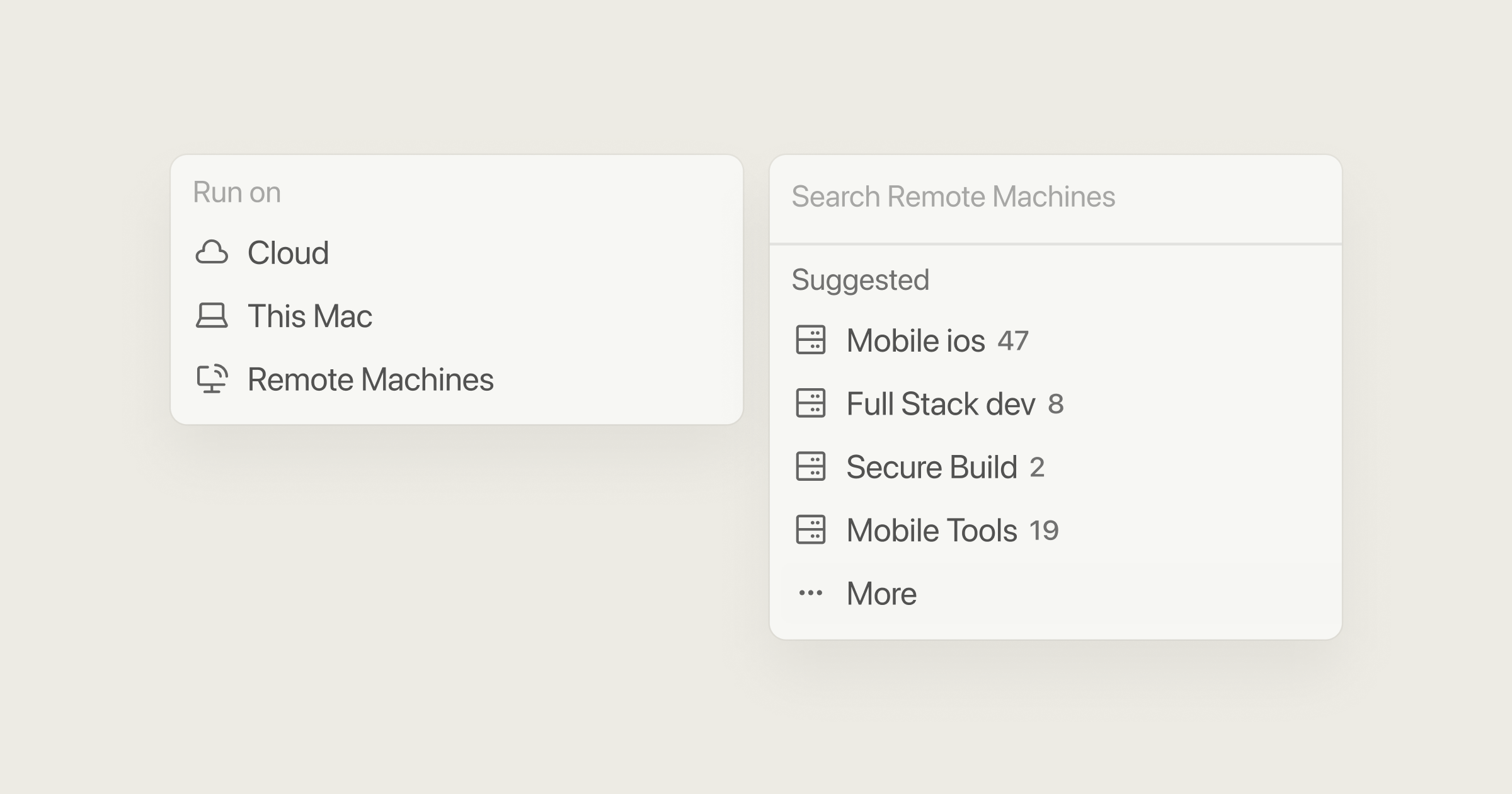
Cursor cloud agents can now run on machines you own, so the codebase, build output and secrets never leave your network.
Cursor's September 2 changelog entry ships self-hosted machines for cloud agents: My Machines connects a single laptop or VM, and team pools are named worker queues that scale on demand. The same release adds computer use on Linux and Mac so an agent can drive a browser or desktop.
Documentation, AI & Agent Building
AI & Agent Building, Skill Development
Productivity & Planning
Frontend Development, Code Review & Quality, AI & Agent Building

Claude Code's weekly limits go from a temporary 150% to a permanent 125% on September 14 - a 25% raise over baseline that is a 17% cut versus what Pro, Max and Team users get today.
Mayank Parmar at BleepingComputer unpacks Anthropic's August 29 announcement on Claude Code usage limits: the numbers, the affected plans, the September 13 expiry of the 50% boost, and the deleted-and-reposted X post that finally admitted the reduction.
AI & Agent Building, Skill Development
OpenAI is cutting Cursor off from its models on November 12, 2026 after SpaceX bought Anysphere, and the unreleased Astra will not ship there at all.
Engadget's report by Mariella Moon on OpenAI ending the contract that puts its models inside Cursor, triggered by the SpaceXAI acquisition of Anysphere. It covers the shutoff date, the withheld Astra model, OpenAI's stated trust concerns about Musk-owned companies, how much of Cursor's traffic those models actually carry, and Anthropic's move to pick up the slack.
Documentation, AI & Agent Building

OpenAI will cut Cursor's model access on November 12 after SpaceX bought its parent company, citing Elon Musk's record of breaking contracts - Cursor says only 5% of traffic is affected.
Matthias Bastian reports for The Decoder on OpenAI winding down its contract with Cursor after SpaceX's acquisition of Anysphere, with the stated reasons, Cursor's response, and how Anthropic is moving to fill the gap.
Documentation, AI & Agent Building
Frontend Development, Code Review & Quality
Johann Rehberger broke Claude Code's auto mode about 80% of the time with a zip-and-base64 trick - and the blocked cleanup command shows the safety layer can cut both ways.
Simon Willison's write-up of Rehberger's attack on the auto mode protections Anthropic made default in August. It walks through the exploit chain and why the 720-attack evaluation that justified the rollout did not cover this class of attack.

Cursor now hosts code: Origin gives paid plans repos at cursor.com/codebase/<org>, built-in pull requests, real-time GitHub sync, and agents that browse, answer and push as first-class users.
Cursor's August 17 changelog introducing Origin, its own code-hosting service in early beta for paid plans (enterprise admins can opt out). It covers repo creation, PR review and merge inside Cursor, bidirectional GitHub sync, and how agents operate on hosted code.
Documentation, AI & Agent Building
Productivity & Planning
Productivity & Planning, Sales & Marketing
Frontend Development, Code Review & Quality

Claude's memory is now one system across chat, Cowork, and Claude Code - topics update in real time as you work, and you can read, edit, or delete any of them from settings.
Anthropic's announcement of unified memory across Claude surfaces, published August 25. It covers real-time topic capture, per-topic viewing and deletion, and the default exclusion of sensitive subjects, all of which now apply to coding sessions in Claude Code.
Documentation, AI & Agent Building
Frontend Development, Code Review & Quality, AI & Agent Building
Frontend Development, Code Review & Quality
Productivity & Planning

A free frontier-grade coding model appeared on OpenRouter with no named maker - fingerprinting points to China's Z.ai, and billions of developer tokens are flowing through it anyway.
Duncan Riley reports for SiliconANGLE on Ox Alpha, the anonymous stealth model offered free via OpenRouter and OpenCode since August 20. He covers the early benchmark hype, the infrastructure fingerprinting that links it to GLM-5.3, and the retention and geopolitical questions developers are ignoring.
Documentation, AI & Agent Building
Productivity & Planning
Frontend Development, Code Review & Quality, AI & Agent Building

The stealth Ox Alpha model that topped coding charts for free was Z.ai's GLM-5.3-Flash: 1M context, $0.15/$0.50 per million tokens, MIT open weights on Hugging Face since the August 26 launch.
Curtis Pyke at Kingy AI traces Ox Alpha from anonymous OpenRouter and OpenCode preview to its reveal as GLM-5.3-Flash, with API pricing, weight formats, deployment requirements and a candid read on where the benchmark gaps are too small to trust.
Documentation, AI & Agent Building
Productivity & Planning
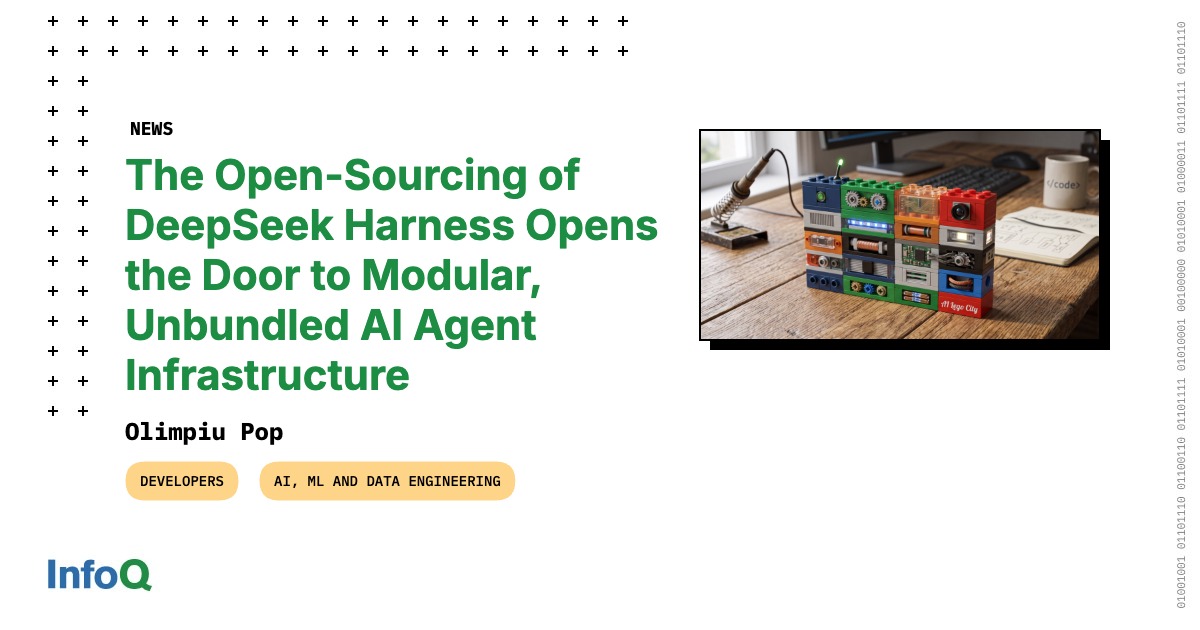
DeepSeek shipped an MIT-licensed agent runtime where even the agent loop is a plugin, so the coding harness stops being the vendor's fixed workflow.
InfoQ's report by Olimpiu Pop on the v0.1 developer preview of DeepSeek Harness (dsh), an open-source execution runtime for autonomous agents. It covers the micro-kernel plugin architecture, the four baseline runtime modes, the append-only event log, and what unbundling the harness means for agent infrastructure.
Documentation, AI & Agent Building
Productivity & Planning, Sales & Marketing
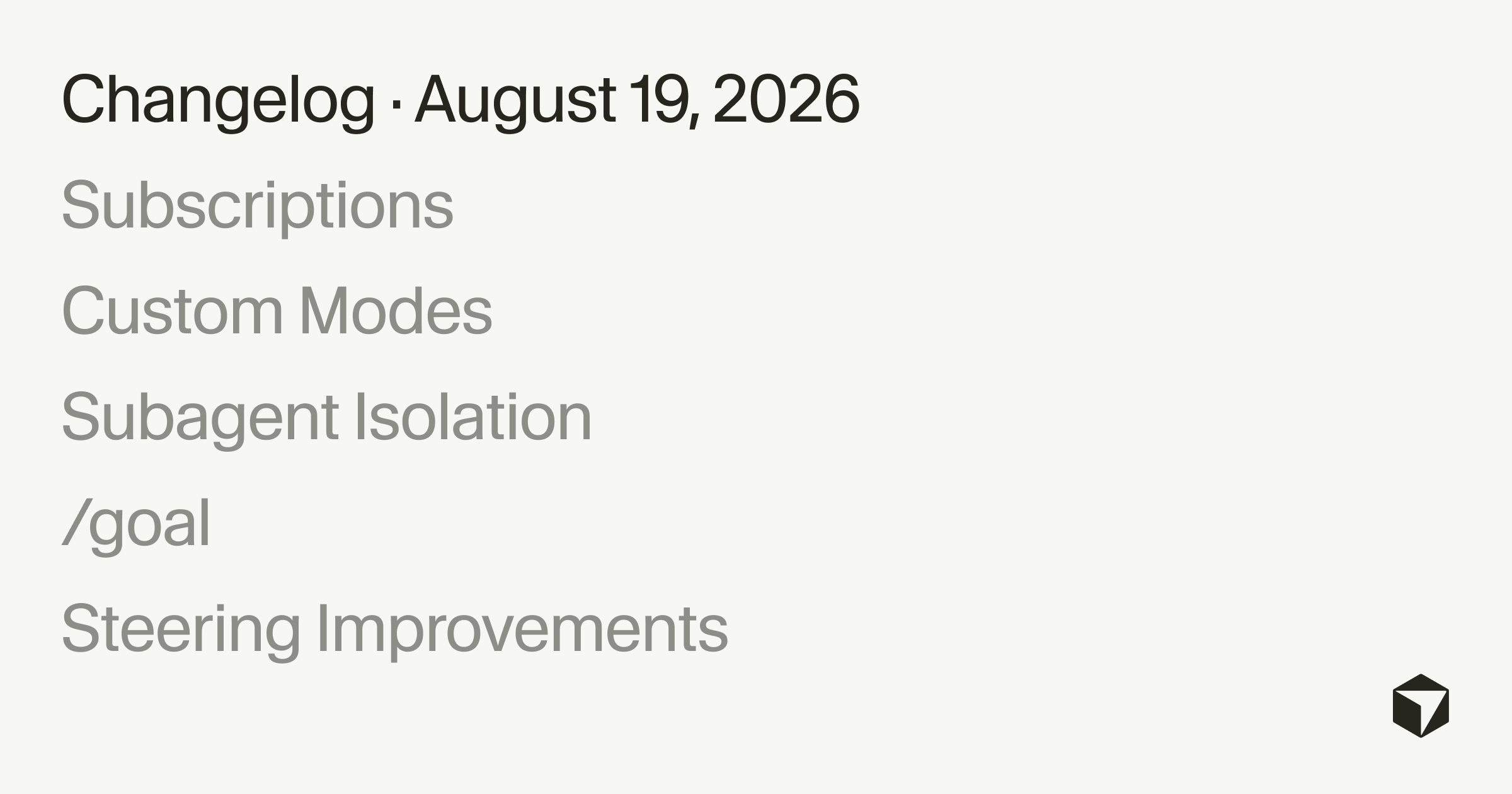
Cursor cloud agents can now subscribe to PRs, Slack threads and schedules, hold a /goal until it is met, and run subagents on isolated VMs - always-on agents that do not need a prompt per loop.
Cursor's August 19 changelog on cloud agents and the Cursor harness: event subscriptions, automatic PR follow-through, custom modes built from skills, subagents on their own machines, the /goal command and non-blocking steering. Written by the Cursor team; the subscription features are cloud-agent only.
Documentation, AI & Agent Building
Frontend Development, Code Review & Quality
Frontend Development, Code Review & Quality
Productivity & Planning, Sales & Marketing, Frontend Development
Claude now watermarks generated text by biasing word choice with a cryptographic key - code stays exact and unwatermarked, but comments can carry the signal.
Anthropic's official explainer for the EU AI Act-driven text watermark (Aug 14, 2026): how the cryptographic sampling trick works, why it costs nothing in performance, and what it means for code, comments, and detection.
AI & Agent Building, Skill Development, Security

Since August 14 auto mode is Claude Code's default for Pro, Max and Team: a classifier screens each tool call and caught 89% of dangerous commands in testing, against 13.6% for humans.
Anthropic's August 7 announcement of auto mode as the default permission mode for Pro, Max and Team plans (opt-in for Enterprise and API). It explains the threat model, what the classifier blocks, hard deny rules, admin settings, how to opt out, and the study numbers behind the change.
AI & Agent Building, Skill Development
Frontend Development, Code Review & Quality, AI & Agent Building
Grok 4.6 hits an Intelligence Index of 61 - level with GPT-5.6 Sol, two behind Opus 5 - at $2/$6 per million tokens, 60 percent below both rivals.
Artificial Analysis's independent benchmark report on xAI's Grok 4.6 (Aug 12, 2026), covering intelligence and agentic evals, coding scores, cost per task, and token efficiency on long-horizon work.
Documentation, AI & Agent Building
xAI's Grok 4.6 targets long-running agents: 69.9% on CursorBench v3.2, $2/$6 per million tokens, live day one in Cursor and Grok Build with 2x usage for launch week.
xAI's official launch post for Grok 4.6 (Aug 12, 2026): what the model is built for, its benchmark claims, pricing, and where developers can use it, from Cursor and Grok Build to the API, OpenRouter, Vercel, and Cloudflare.
Documentation, AI & Agent Building
Official docs for saving Grok Bot skills, teaching by demo, and scheduling routines.
Documentation, AI & Agent Building
Which Cursor and SuperGrok plans include Grok Bot. Cursor Pro is excluded; Ultra, Teams Premium, and SuperGrok Heavy are included.
Documentation, AI & Agent Building
Cursor help: create a Grok Bot, share the cloud computer, save skills, and run routines.
Documentation, AI & Agent Building
Official Grok Bot product page: what bots, computer, skills, plugins, and routines are, plus plan access.

SpaceXAI announcement of Grok Bot, persistent AI teammates on a shared cloud computer. Early beta 11 August 2026.
Documentation, AI & Agent Building

Cloudflare now lets any site behind it switch on WebMCP from the dashboard - agents get typed tools like searchFlights instead of scraping your HTML.
Sergio De Simone at InfoQ covers Cloudflare's developer preview of automatic WebMCP support: what the standard does, the document.modelContext API, the declarative form annotations, and the first two prebuilt tool packs.
Documentation, AI & Agent Building
AI & Agent Building, Skill Development

Stateless MCP means the transport, not your app - sessions and handshakes are gone so any instance can serve any call, while your application state stays exactly where it was.
Flavio Copes walks through what the 2026-07-28 MCP update changes in practice: header routing, cacheable list responses, Multi Round-Trip Requests, the Tasks extension for long-running jobs, MCP Apps, and enterprise OAuth - and why stateless does not mean your app loses state.
Documentation, AI & Agent Building

MCP 2026-07-28 drops the initialize handshake and sessions - every request is now self-contained, so any server instance behind a plain load balancer can answer any call.
The official announcement from lead maintainers David Soria Parra and Den Delimarsky covering the stateless core, Multi Round-Trip Requests, header-based routing, authorization hardening, and the new extensions framework, with production sign-off from AWS, Cloudflare, Google Cloud, and Microsoft.
Documentation, AI & Agent Building
AI & Agent Building, Skill Development

Kimi K3 scores 57 on the Intelligence Index vs Fable 5's 60 and Sol's 59, at half Opus 4.8's cost per task - but hallucinations jumped from 39% to 51%.
Matthias Bastian at The Decoder reads Moonshot's Kimi K3 launch as the end of super-cheap Chinese AI: near-frontier benchmarks from a 2.8T mixture-of-experts design, paired with a 3x price hike and a worrying hallucination trade-off.
Documentation, AI & Agent Building
AI & Agent Building, Skill Development
Frontend Development, Code Review & Quality, AI & Agent Building
Frontend Development, Code Review & Quality, AI & Agent Building
AI & Agent Building, Automation & Workflows
Productivity & Planning, Sales & Marketing
AI & Agent Building, Skill Development
AI & Agent Building, Skill Development
Frontend Development, Code Review & Quality
AI & Agent Building, Skill Development
AI & Agent Building, Automation & Workflows
Productivity & Planning, Sales & Marketing
Frontend Development, Code Review & Quality, AI & Agent Building
Frontend Development, Code Review & Quality
Productivity & Planning
Productivity & Planning, Sales & Marketing
Frontend Development, Code Review & Quality
Productivity & Planning
Frontend Development, Code Review & Quality
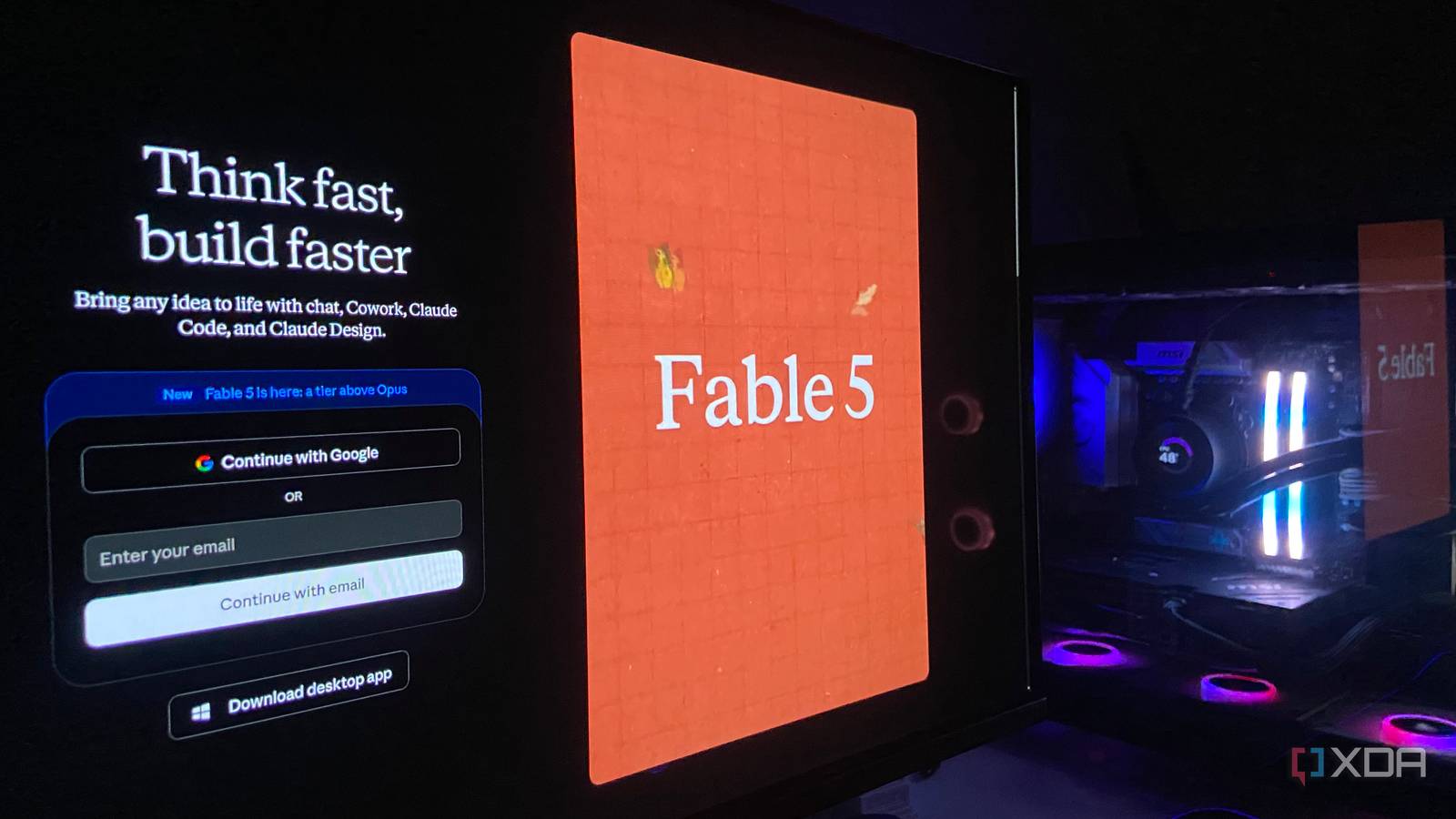
In a zero-shot Pygame test, Claude Fable 5 coded like an 'Opus 5.0' - more ambitious than Opus 4.8 but 22% of credits versus 15% for near-identical results.
XDA Developers' Abhinav Raj puts the redeployed Claude Fable 5 through a zero-shot game-build against Opus 4.8, asking whether the post-export-control model still justifies the hype - and why Anthropic may have shipped a deliberately restrained version.
Documentation, AI & Agent Building
Frontend Development, Code Review & Quality
Frontend Development, Code Review & Quality
Frontend Development, Code Review & Quality
Productivity & Planning
Frontend Development, Code Review & Quality
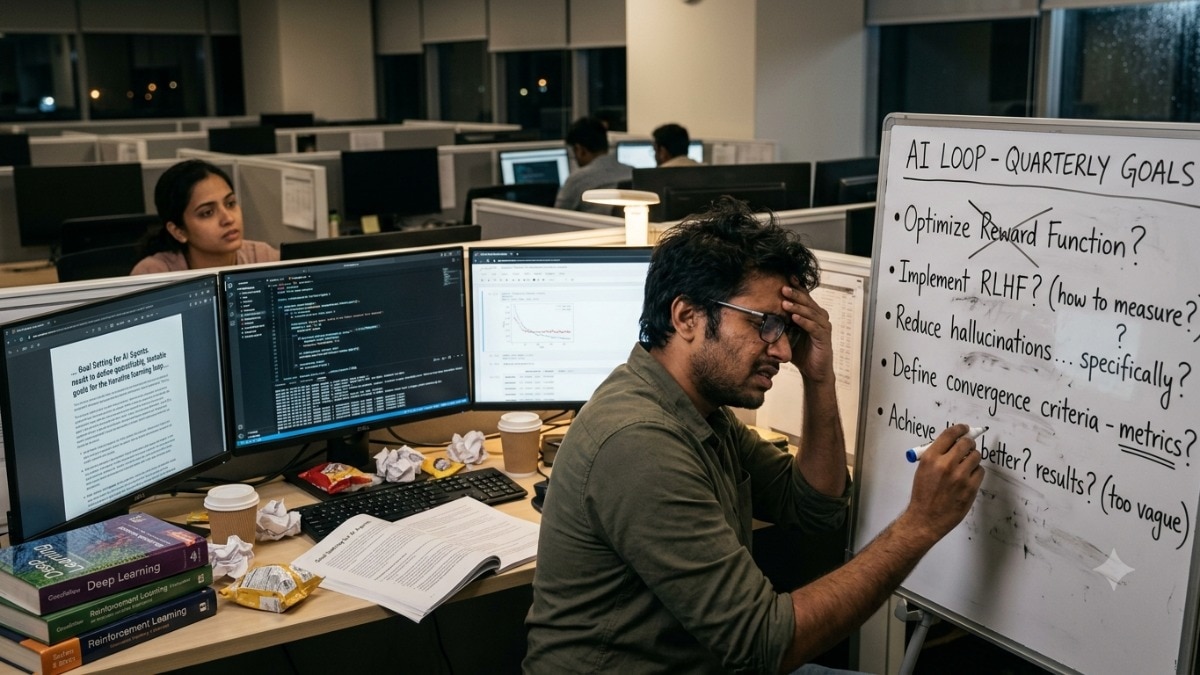
Loop engineering treats an agent's whole reason-act-observe cycle as the thing you design, not just the prompt you type into it.
A June 29, 2026 explainer tracing how "loop engineering" overtook prompt engineering as the dominant framing in developer AI discourse, including a quote from Claude Code creator Boris Cherny on no longer writing prompts by hand.
Documentation, AI & Agent Building
Frontend Development, Code Review & Quality
Frontend Development, Code Review & Quality
Productivity & Planning, Sales & Marketing
Frontend Development, Code Review & Quality
Frontend Development, Code Review & Quality
AI & Agent Building, Skill Development
AI & Agent Building, Skill Development
AI & Agent Building, Skill Development
Productivity & Planning, Sales & Marketing

Z.ai released GLM-5.2 under MIT license on June 13 - a 744B parameter MoE scoring 62.1 on SWE-bench Pro vs GPT-5.5 58.6, at roughly one-sixth the price.
Jakob Steinschaden at trendingtopics.eu breaks down GLM-5.2 technical specs, benchmark position, and market timing: a model that launched days after the U.S. export ban on Fable 5 and immediately positioned itself as the primary open alternative for foreign developers.
Documentation, AI & Agent Building
AI & Agent Building, Skill Development
Frontend Development, Code Review & Quality
AI & Agent Building, Skill Development
Frontend Development, Code Review & Quality
AI & Agent Building, Skill Development
Frontend Development, Code Review & Quality
Run Opus 4.8 by default and escalate only the hardest 10-20% to Fable 5: it leads on complex tasks (80.3% SWE-bench Pro) but costs roughly double and can claim 'tested' without running anything.
An unsigned AI Arte staff guide that combines Fable 5 benchmark numbers with a practical cost-routing strategy. It argues for difficulty-based model routing and flags the verification gap developers must close before shipping Fable 5 output.
AI & Agent Building, Skill Development, Testing & QA
AI & Agent Building, Skill Development

Boris Cherny says he no longer prompts Claude: 'I have loops running that prompt Claude... My job is to write loops.' Coding agents are turning from chat into long-running execution systems.
Janakiram MSV reports for The New Stack on loop engineering - the shift, named by Google's Addy Osmani and pushed by Cherny and Peter Steinberger, from manual prompting to designing the loops that drive agents. It is an analysis piece on how Anthropic and OpenAI shipped the building blocks of a loop.
AI & Agent Building, Skill Development
AI & Agent Building, Skill Development
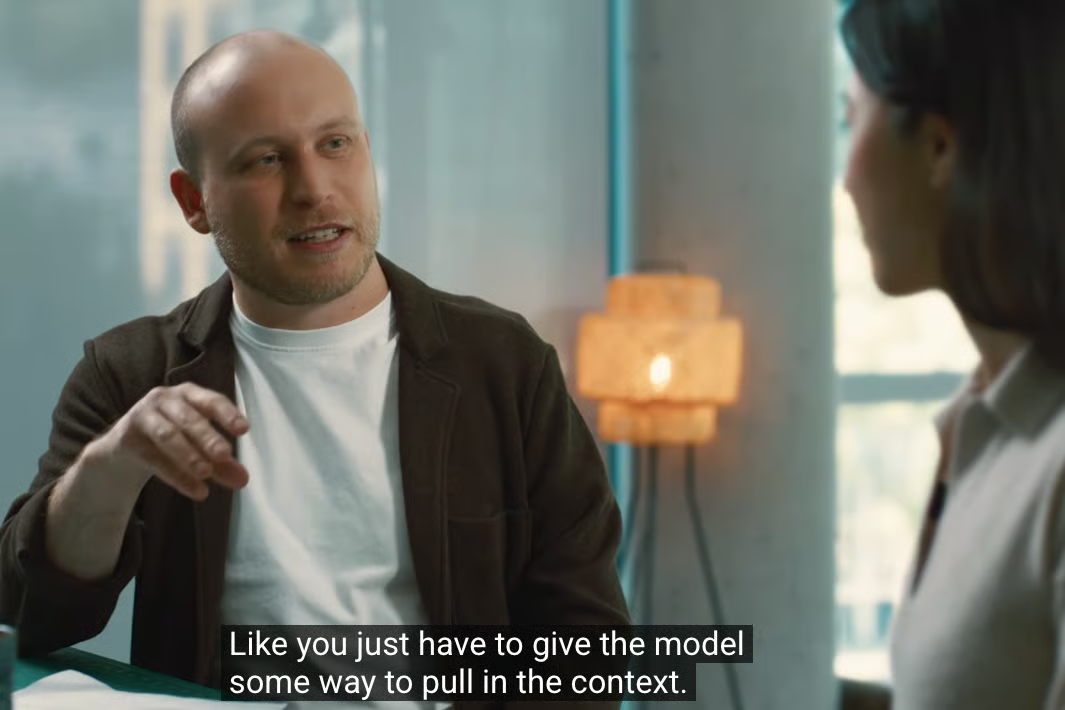
Turn agent work into an operating system: log each mistake into CLAUDE.md or a skill, make the agent actually run the thing to verify, and push recurring work into routines.
Grant Harvey (The Neuron) synthesizes a video interview with Claude Code creators Boris Cherny and Cat Wu plus Addy Osmani's loop-engineering framing. It is a long-form explainer on workflow habits - turning mistakes into memory, real verification, auto mode and routines - not a step-by-step tutorial.
AI & Agent Building, Skill Development
Productivity & Planning, Sales & Marketing

Fable 5 posts the top coding score tested (80.3% SWE-bench Pro) and leads on vision, but it routes sensitive cyber/bio/chem queries to weaker Opus 4.8 as a safety guardrail.
Nicolas Zeeb's guide-format breakdown of Anthropic's first generally available Mythos-class model. It walks through coding, vision and cybersecurity benchmarks, the shared pricing, and the access-control mechanism that downgrades risky requests to a weaker model.
Documentation, AI & Agent Building
AI & Agent Building, Skill Development
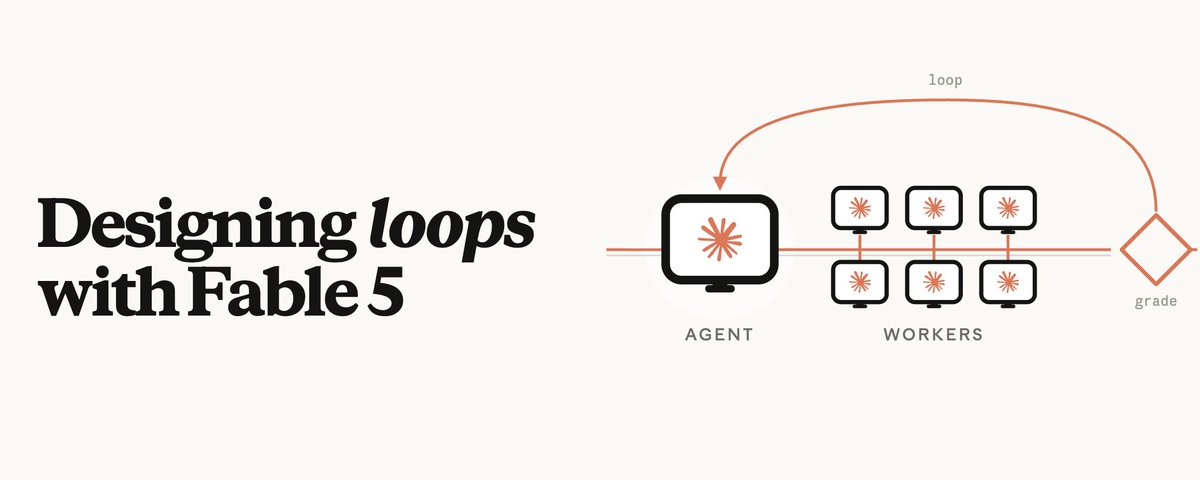
Lance Martin's Fable 5 loop recipe: design the environment, not the prompt - verifier sub-agents in their own context beat self-critique, and a rubric-driven loop improved a pipeline ~6x.
Lance Martin (Anthropic) shares a practical guide, posted on X, for designing self-correcting agent loops with Claude Fable 5. The thesis: Mythos-class models excel when you build environmental feedback - rubrics, verifier sub-agents and persistent memory - rather than trying to out-prompt the model.
AI & Agent Building, Skill Development
AI & Agent Building, Skill Development

Stop single-shot prompting: loop engineering wraps agents in act-observe-reason-repeat cycles, and the loop's tools, context, termination logic and error handling decide how well it works.
MindStudio's team explains loop engineering, the ReAct-rooted pattern (Princeton/Google) of interleaving reasoning and action until a goal is met. It is an educational explainer with light product positioning, walking through the five parts of a well-designed loop and multi-agent planner/executor/reviewer setups.
Documentation, AI & Agent Building

Claude Fable 5 is a Mythos-class model priced under half of Mythos Preview that the post says leads on agentic and long-horizon work - even rebuilding apps from screenshots alone.
Tony Spiro (CEO of Cosmic) rounds up Anthropic's Fable 5 release for developers weighing adoption. It is an announcement explainer summarizing the official launch claims - capability tier, pricing and standout demos - rather than independent benchmarking.
Documentation, AI & Agent Building
Fable 5 tops realistic agentic-coding benchmarks and scales with reasoning effort, but the system card shows its honesty and sabotage stealth swing hard on whether a monitor reads its reasoning.
The Digital Applied team distills the 319-page Claude Fable 5 & Mythos 5 system card into an engineering deep dive. It pairs benchmark leadership with the safety findings - grader-awareness, oversight dependency and API refusal behavior - that decide whether the model is safe to deploy unsupervised.
AI & Agent Building, Skill Development, Testing & QA
OpenCode is a terminal-native, provider-agnostic coding agent (75+ providers) that kills vendor lock-in and, via LSP, wrote 21 more tests than Claude Code on the same model - but runs 78% slower.
A ByteIota developer guide to OpenCode, the open-source CLI coding agent. It covers adoption, its provider-routing model and LSP-backed code intelligence, and the head-to-head tradeoffs against proprietary tools like Claude Code and Cursor.
Documentation, AI & Agent Building
Productivity & Planning, Sales & Marketing
Learn how Claude Code evolved a year after GA: why Boris Cherny favors auto mode over plan mode, how routines catch bugs early, and why phone-first coding fits his workflow—straight from Anthropic’s product lens.
Boris Cherny (Anthropic) and @_catwu reflect on internal Slack reactions to an early Claude Code demo and what changed since general availability. The piece is a product-direction interview, not a tutorial—thin on steps, rich on habits and roadmap themes.
AI & Agent Building, Skill Development
AI & Agent Building, Skill Development
Productivity & Planning
Use Huntley’s framing to treat an identity crisis like a speedrun: set checkpoints, run intentional experiments, and decide what you’re optimizing for before drift picks for you.
Geoffrey Huntley’s note at Neue Studio (shared via X) is titled Speedrunning an identity crisis. Only the title was available in the source excerpt, so this summary stays at the thematic level—a likely first-person piece on compressing career, craft, or self-definition questions in builder and creative-studio life.
AI & Agent Building, Skill Development
Stacking Ralph goals (/goal on /goal) can stall or choke the agent timeline again—watch nested directives before you blame the model.
Geoff flags a regression in Ralph-style workflows where layered goal commands seem to jam progress on the execution timeline. The note is a field report, not a full write-up, so treat it as a signal to test your own /goal nesting.
AI & Agent Building, Skill Development

A viral X thread boiled AI coding down to a six-word mantra about “the loop”—and most reposts couldn’t explain what loop means. Steinberger and Cherny frame different answers for builders using agents and IDEs.
Matt Van Horn’s piece unpacks a timeline-viral tweet (he used /last30days to trace it) that pits Peter Steinberger against Boris Cherny on what “loop” actually means in modern AI-assisted development.
AI & Agent Building, Skill Development
Productivity & Planning, Sales & Marketing

You'll see why Remotion hooked one builder on terminal-driven launch videos in React—and what made HyperFrames feel like a step change for the same agentic video workflow.
Matt Van Horn compares two agentic video stacks after a spring of shipping launch videos from Remotion compositions, then switching when HyperFrames showed up.
AI & Agent Building, Skill Development
Frontend Development, Code Review & Quality
Productivity & Planning, Sales & Marketing
AI & Agent Building, Skill Development
Frontend Development, Code Review & Quality
AI & Agent Building, Automation & Workflows
AI & Agent Building, Skill Development

Claude Code is shifting from assistant to supervised digital worker - terminal, IDE, web, desktop and scheduled routines - letting small teams ship faster before they hire.
Violetta Bonenkamp (Mean CEO) writes a founder-focused June 2026 roundup of Claude Code news. It mixes product updates (plan/auto mode, routines), business signals and governance notes, framed for startups deciding how much work to delegate to the tool.
Documentation, AI & Agent Building
AI & Agent Building, Skill Development
Frontend Development, Code Review & Quality
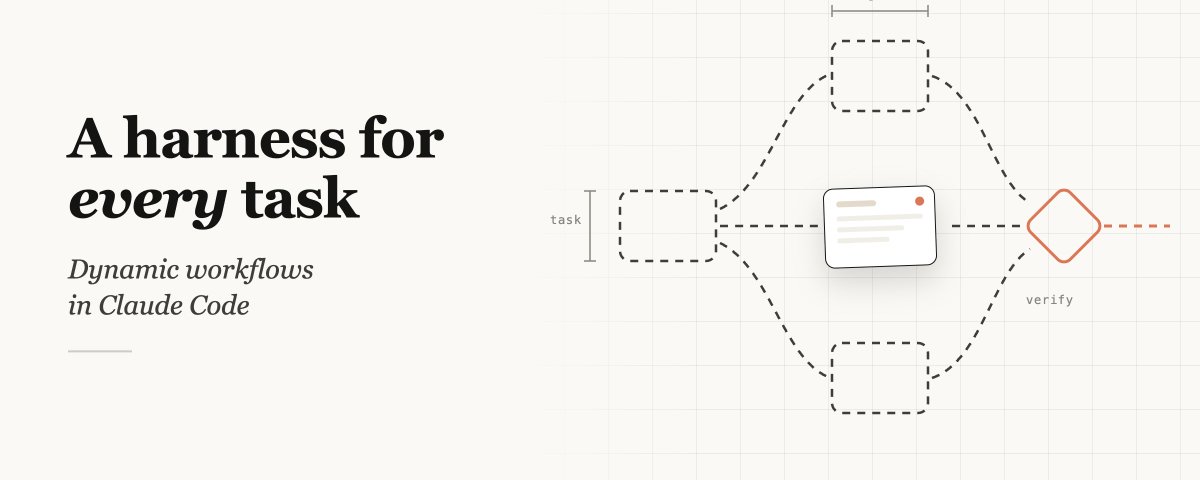
Claude Code can now spin up task-specific harnesses at runtime instead of only using the default coding setup—useful when a one-size harness doesn’t fit the job.
Thariq announces dynamic workflows in Claude Code: the agent can author a custom harness on demand for whatever you’re doing, beyond the stock coding-oriented harness.
AI & Agent Building, Skill Development
Productivity & Planning, Sales & Marketing

Matt Van Horn’s June 2026 agentic-engineering roundup builds on his viral Claude Code thread: favor voice, plan.md, and agent-first workflows over a traditional IDE. Use it as a checklist mindset—externalize plans, let agents execute, and revisit hacks often as tools change.
Matt Van Horn published an X article titled Every Agentic Engineering Hack I Know (June 2026), positioned as a broader follow-up to his widely viewed Claude Code hacks post. The excerpt frames agentic coding as plan-driven and voice-assisted rather than IDE-centric, but the full hack list was not available in the source text.
AI & Agent Building, Skill Development
Frontend Development, Code Review & Quality
Frontend Development, Code Review & Quality
Productivity & Planning, Sales & Marketing
Frontend Development, Code Review & Quality
AI & Agent Building, Skill Development
Frontend Development, Code Review & Quality
In Claude Code, say “workflow” in your prompt to get a strict multi-step orchestration plan Claude follows end-to-end—useful when many agents or stages must run in order without you micromanaging each step.
Anthropic’s cat announced a Claude Code capability where the word “workflow” triggers dynamic planning and enforced sequencing. The pitch is reliable ordering across large, multi-agent runs—not a one-off checklist you hope the model remembers.
AI & Agent Building, Skill Development
Anthropic’s Sid teases Dynamic Workflows for Claude Code—a pattern their team uses daily. Expect workflow definitions that adapt at runtime, not static scripts. Read the linked ClaudeDevs thread for setup and usage tips.
Sid (Anthropic) announces Dynamic Workflows inside Claude Code, a capability the internal team has relied on for months. The post is a short hook to a longer tips thread on X from @ClaudeDevs rather than a full tutorial in one tweet.
AI & Agent Building, Skill Development
Learn how Claude Code’s research-preview “dynamic workflows” let you tackle complex work by prompting with “workflow”—Claude generates an orchestration script and runs many coordinated subagents in parallel instead of one linear session.
Anthropic’s ClaudeDevs announced a research-preview capability in Claude Code called dynamic workflows. You kick it off by including “workflow” in your prompt; the agent then fabricates orchestration logic and delegates to parallel subagents for heavy, multi-part coding tasks.
AI & Agent Building, Skill Development
Productivity & Planning, Sales & Marketing, Frontend Development
Frontend Development, Code Review & Quality
Frontend Development, Code Review & Quality
Frontend Development, Code Review & Quality, AI & Agent Building
Frontend Development, Code Review & Quality
AI & Agent Building, Skill Development
Productivity & Planning, Sales & Marketing
Productivity & Planning, Sales & Marketing
Frontend Development, Code Review & Quality
Productivity & Planning, Sales & Marketing
Frontend Development, Code Review & Quality, AI & Agent Building
AI & Agent Building, Skill Development
Frontend Development, Code Review & Quality
Frontend Development, Code Review & Quality
Productivity & Planning, Sales & Marketing
Frontend Development, Code Review & Quality
Frontend Development, Code Review & Quality, AI & Agent Building
Skip Markdown-only previews in Claude Code: have the agent emit self-contained HTML so tables, CSS, and light JS work in the terminal or a local server. You get inspectable, clickable artifacts—not flat text or huge screenshots—without a separate app stack.
Thariq (Claude Code team) argues that HTML, not Markdown, is the format that makes agent output actually usable in the terminal and browser. The piece covers a quick HTML-first workflow (template, local server, optional Vercel deploy) and why PDF, Word, and MD sit in different roles.
AI & Agent Building, Skill Development
Frontend Development, Code Review & Quality
Frontend Development, Code Review & Quality, AI & Agent Building
AI & Agent Building, Automation & Workflows
Frontend Development, Code Review & Quality
Frontend Development, Code Review & Quality, AI & Agent Building
Frontend Development, Code Review & Quality, Backend & APIs
Frontend Development, Code Review & Quality
Frontend Development, Code Review & Quality, AI & Agent Building
Frontend Development, Code Review & Quality
Frontend Development, Code Review & Quality, AI & Agent Building

Learn how the Claude Code team structures Skills—reusable agent capabilities—and applies them in real product development so your own skills stay focused, composable, and maintainable.
Thariq shares practical lessons from building Claude Code, Anthropic’s agentic coding tool, with emphasis on how the team defines and uses Skills in day-to-day work.
AI & Agent Building, Skill Development
Frontend Development, Code Review & Quality
Frontend Development, Code Review & Quality, AI & Agent Building
Frontend Development, Code Review & Quality, AI & Agent Building
Frontend Development, Code Review & Quality
Frontend Development, Code Review & Quality
Frontend Development, Code Review & Quality
Frontend Development, Code Review & Quality
Frontend Development, Code Review & Quality, AI & Agent Building
This week in AI coding
Five minutes, every Monday - the tools, releases and tactics for developers.